
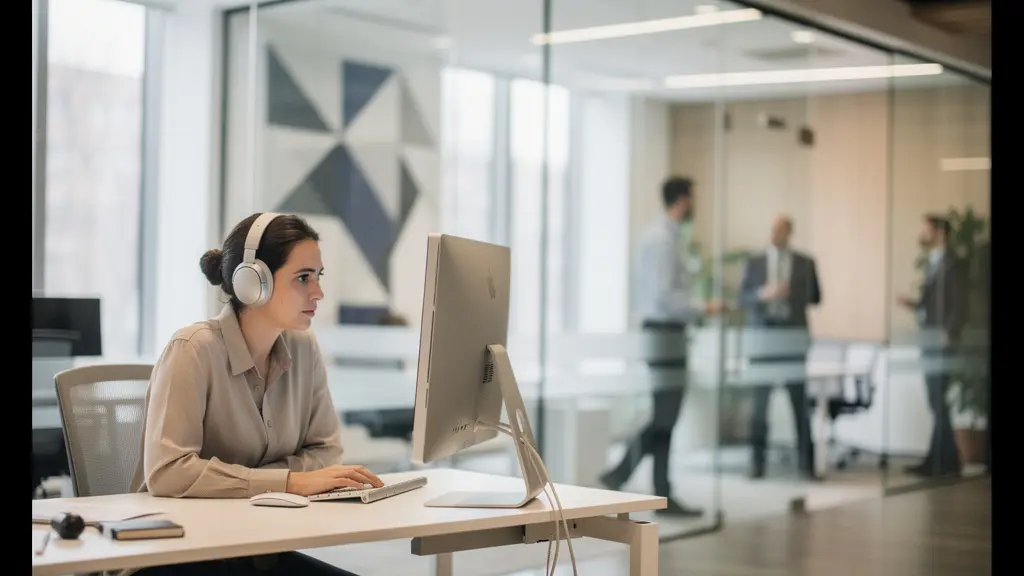
Active Noise Cancellation isn’t a gadget; it’s a strategic investment in reclaiming your cognitive real estate.
- Effective ANC technology selectively filters out low-frequency distractions, reducing mental fatigue far more than simple silence.
- The right device improves not only your focus but also your auditory health and ergonomic comfort during long work sessions.
Recommendation: Evaluate audio technology as a core productivity tool, prioritizing microphone intelligence and ergonomic design over price alone to achieve a measurable return on your focus.
The modern Canadian workplace, whether a bustling open-plan office in downtown Toronto or a work-from-home setup in Calgary, has one universal challenge: the relentless assault on our concentration. We’re told to build better habits, manage our time, and simply “focus harder.” But these strategies often fail because they ignore the environment itself. The constant hum of HVAC systems, the murmur of distant conversations, and the surprise contributions from pets on a video call all chip away at our finite cognitive resources, leading to distraction and mental fatigue.
The common solution is to reach for any pair of headphones, but this often just swaps one noise for another. The real breakthrough comes not from blocking sound, but from mastering it. What if the key to unlocking sustained, deep work wasn’t about willpower, but about creating a personal zone of auditory control? This is where Active Noise Cancellation (ANC) technology transcends being a mere accessory and becomes a fundamental tool of workplace ergonomics.
This article moves beyond generic reviews to deconstruct *why* ANC is a critical investment for any serious professional. We will explore the science behind different noise cancellation technologies, their practical application in real-world Canadian work scenarios, the crucial link to hearing safety and ergonomic well-being, and how to make the smartest investment for your specific needs. It’s time to stop fighting distractions and start strategically managing your sensory environment.
To navigate this comprehensive analysis, we’ve structured this guide to address the most critical questions professionals face when considering an investment in their auditory focus. The following sections will provide clear, evidence-based answers to help you reclaim your productivity.
Summary: Why Active Noise Cancellation Is the Best Investment for Productivity in Open Offices?
- How does adaptive noise cancellation differ from passive isolation?
- Headphones for Business Travel: Which models survive the Toronto-Vancouver flight on one charge?
- Over-ear vs. In-ear: Which style prevents fatigue during 4-hour Zoom marathons?
- The “Mute” Fail: Which headsets actually filter out background dog barking?
- Hearing Safety: How to use noise cancellation to lower volume and protect your ears?
- Smart Lighting for Focus: How changing color temperature signals your brain to work?
- Soundbars vs. Headsets: Which audio upgrade gives the best immersion per dollar?
- Which “Digital Detox” Gadgets Actually Improve Strategic Focus for Executives?
How does adaptive noise cancellation differ from passive isolation?
Understanding the technology behind noise-cancelling headphones is the first step in making an informed investment. The two primary methods, passive isolation and active cancellation, work on entirely different principles. Passive noise isolation is the simplest form: it’s a physical barrier. Think of thick, well-fitting earcups on over-ear headphones or the snug seal of in-ear tips. This method is effective at blocking high-frequency sounds like people talking or keyboard clicks, but it’s largely ineffective against the low-frequency, monotonous drones that define many office and travel environments.
Active Noise Cancellation (ANC), by contrast, is a sophisticated electronic system. It uses microphones to detect incoming ambient sound waves and then generates an inverse sound wave—a “phase-inverted” signal—that effectively cancels out the original noise before it reaches your ear. This is precisely why ANC excels where passive isolation fails. In fact, research shows that active noise cancellation achieves a 25-40dB reduction for frequencies between 20-800Hz, the exact range of airplane engines, train rumble, and office air conditioning.
Adaptive ANC is the next evolution. While standard ANC applies a constant level of cancellation, an adaptive system uses its microphones to continuously monitor your environment and adjust the intensity of the noise cancellation in real-time. This means it can ramp up for a noisy subway car and then ease off in a quiet library, providing the optimal level of silence without creating an unnatural feeling of pressure. This intelligent adjustment is the hallmark of premium devices, offering the most seamless experience in variable environments.
To clarify these distinctions, the following table breaks down the key attributes of each technology. It highlights how each system is powered, its ideal use case, and its impact on factors like battery life and price.
| Feature | Passive Isolation | Active (ANC) | Adaptive ANC |
|---|---|---|---|
| Power Required | No | Yes | Yes |
| Best For | High frequencies (voices, clicks) | Low frequencies (engine noise) | Variable environments |
| Battery Impact | None | Reduces battery 20-30% | Reduces battery 25-35% |
| Price Range | Budget-friendly | Mid to Premium | Premium |
| Effectiveness | Fit-dependent | Consistent | Self-adjusting |
Ultimately, choosing the right technology means matching it to your primary environment. For a modern professional facing a variety of noise challenges, an adaptive ANC system offers the most powerful and versatile tool for securing your cognitive real estate.
Headphones for Business Travel: Which models survive the Toronto-Vancouver flight on one charge?
For the Canadian professional, frequent cross-country travel is a reality. A flight from Toronto to Vancouver is roughly five hours, but when you factor in airport time, potential delays, and the trip to your hotel, you need an audio companion that won’t quit. This is where battery life becomes a non-negotiable feature. The last thing you want is for your sanctuary of silence to disappear mid-flight, leaving you at the mercy of engine drone and cabin chatter.
Fortunately, battery technology in ANC headphones has made incredible strides. The gold standard for over-ear models designed for travel is now well beyond the needs of a single coast-to-coast journey. In fact, modern noise-cancelling headphones typically offer 25-40 hours of playback with ANC enabled. This means you can comfortably handle a round-trip from Halifax to Victoria with multiple layovers without ever reaching for a charging cable.
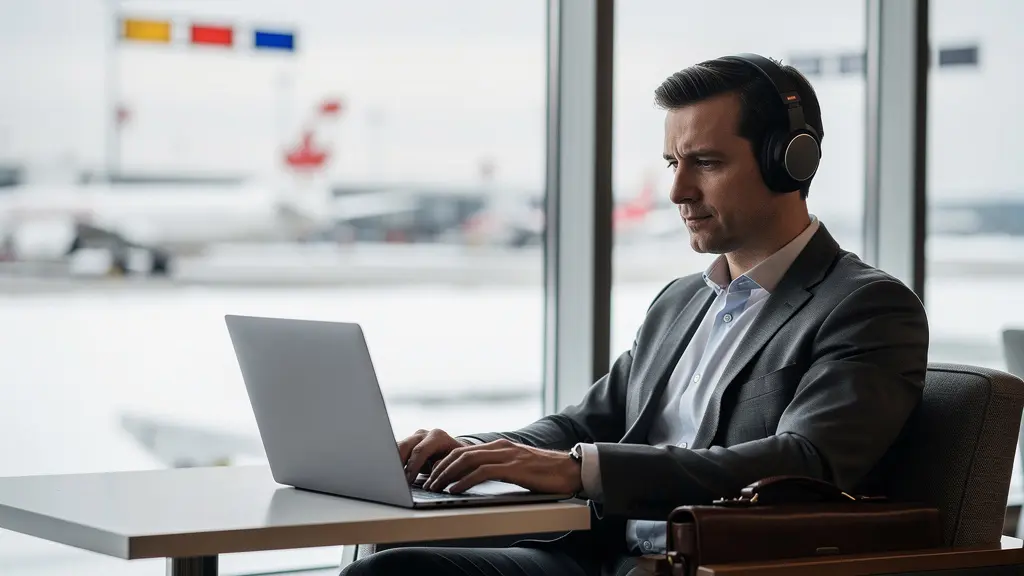
However, raw battery life is only part of the equation for the ideal travel headset. True road-warrior readiness depends on a combination of features that ensure seamless performance from departure gate to hotel room. Quick-charge capabilities, for instance, are a lifesaver, often providing several hours of listening time from just a few minutes of charging. Multi-device connectivity is another crucial element, allowing you to switch effortlessly from a movie on your laptop to a call on your smartphone.
For the frequent flyer, investing in a model that prioritizes these travel-centric features is key. Consider these points a checklist for your next purchase:
- Long-Haul Battery: Seek 30+ hours with ANC on to cover any travel scenario.
- Multi-Device Pairing: Ensure it can connect to your laptop and phone simultaneously.
- Rapid Charging: Look for features like “5 minutes of charge for 4 hours of playback.”
- Portability: A foldable design with a protective hard case is essential for carry-on luggage.
- Wired Backup: A 3.5mm jack and an airline adapter are crucial for in-flight entertainment systems or if the battery finally runs out.
By prioritizing these features, you ensure your headphones are not just a gadget, but a reliable piece of professional equipment that supports your productivity no matter where your work takes you.
Over-ear vs. In-ear: Which style prevents fatigue during 4-hour Zoom marathons?
As work has shifted to include hours of video conferencing, a new ergonomic challenge has emerged: headset fatigue. The choice between over-ear and in-ear styles is no longer just about audio preference; it’s a critical decision for physical comfort and sustained performance. An ill-fitting or heavy headset doesn’t just cause discomfort; it can lead to genuine physical strain over time. This is a matter of workplace health and safety.
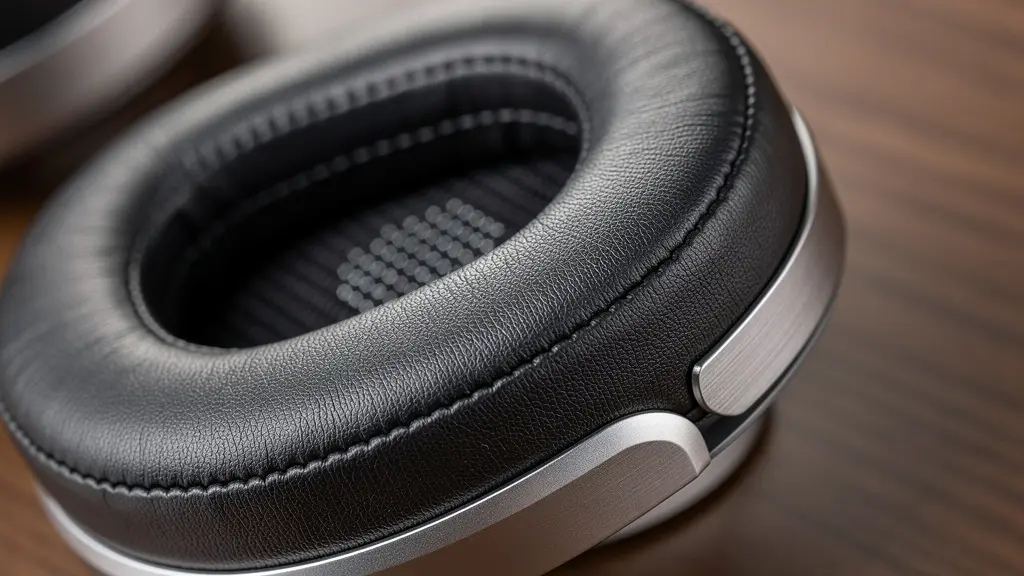
From a cognitive and ergonomic expert’s perspective, the primary goal is to minimize physical “touchpoints” that create pressure and distraction. Over-ear headphones excel here for long-duration use. Their design distributes weight over a larger area via the headband, and the soft, cushioned earcups rest around the ear rather than inside it. This minimizes pressure on the sensitive cartilage of the ear itself, which is a common source of pain with on-ear or poorly fitting in-ear models. Furthermore, the larger driver size in over-ear models can produce a more open, natural soundstage, which can feel less fatiguing to the brain over several hours.
This isn’t just a matter of comfort; it’s a recognized aspect of workplace well-being. As experts in ergonomics note, the wrong equipment can have serious consequences. A Canadian analysis on the subject highlights this connection directly:
The wrong headset style can contribute to musculoskeletal strain, a recognized workplace hazard that WSIB/WorkSafeBC claims can arise from
– Article context, Workplace ergonomics consideration
While in-ear models offer superior portability and a more discreet look, they can create a “plugged-up” feeling, known as the occlusion effect, which can be fatiguing. For a four-hour stretch of continuous calls, over-ear models with plush, breathable earpads and a lightweight construction are unequivocally the superior choice for preventing physical and mental fatigue. The key is to look for materials like memory foam and soft leatherette that conform to the shape of your head without excessive clamping force.
Ultimately, for anyone spending a significant portion of their day on calls, prioritizing the ergonomic design of an over-ear headset is a direct investment in your daily comfort and long-term well-being.
The “Mute” Fail: Which headsets actually filter out background dog barking?
The “you’re on mute” moment has a notorious cousin in the remote work world: the “sorry about my dog” apology. For professionals working from home in Canada, managing background noise isn’t just about personal focus—it’s about maintaining a professional presence on calls. A sudden burst of barking, a nearby siren, or family chatter can instantly undermine your credibility. This is where the quality of your headset’s microphone system becomes just as important as its noise-cancelling for your own ears.
The solution lies in advanced microphone noise suppression technology. This is distinct from the ANC that creates a quiet bubble for you, the listener. Instead, this technology uses multiple microphones and sophisticated AI algorithms to identify your voice and separate it from unwanted ambient sounds. One microphone focuses on picking up your speech, while others detect background noise. The headset’s processor then digitally subtracts the noise from the signal, transmitting only your clear voice to the other participants on the call.
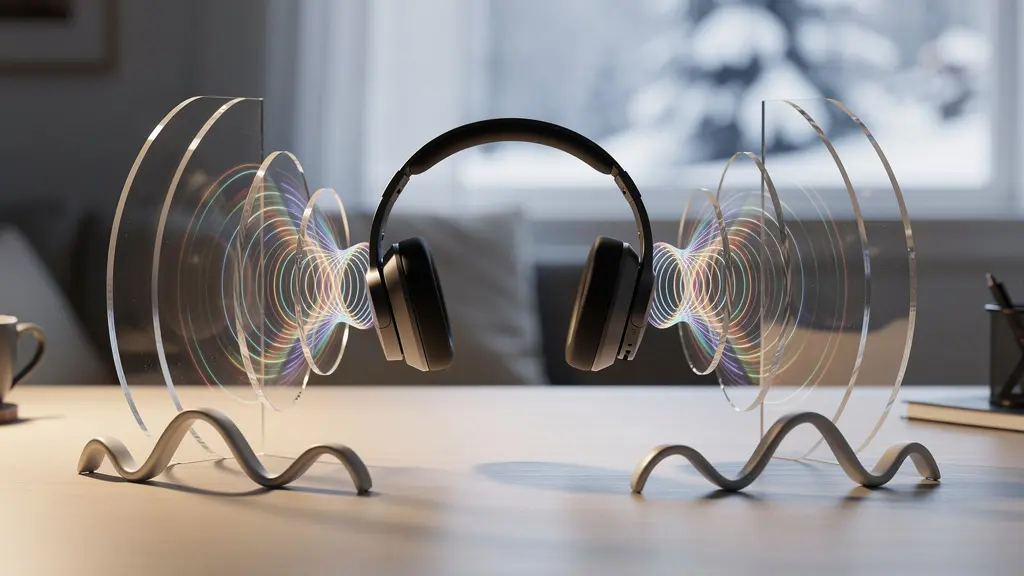
The effectiveness of these systems can be remarkable. While a standard headset microphone will pick up everything, a high-quality ANC headset with beamforming microphones can create a virtual cone of silence around your mouth. This means that even sharp, sudden noises like a dog bark or a dropped dish are significantly reduced or eliminated entirely for your listeners. Premium models boast impressive specifications, with some achieving up to 97% ambient noise reduction on the microphone output, effectively solving the “mute fail” problem before it starts.
This technology is a game-changer for anyone in a shared or unpredictable home environment. It allows you to participate in important meetings with confidence, knowing that your message is being heard clearly and professionally, regardless of what’s happening around you. It transforms the headset from a simple communication device into a tool for environmental control and professional image management.
When investing in a headset for remote work, asking “How well does it cancel noise for me?” is only half the question. The other, equally critical half is, “How well does it cancel my noise for others?”
Hearing Safety: How to use noise cancellation to lower volume and protect your ears?
One of the most overlooked benefits of Active Noise Cancellation is its profound impact on hearing health. In noisy environments, our natural instinct is to crank up the volume of our music or podcasts to drown out the background clamor. This behavior, especially over long periods, exposes our ears to dangerously high decibel levels and is a leading cause of noise-induced hearing loss. ANC offers a powerful, proactive solution to this problem.
By electronically removing the low-frequency background noise, ANC creates a quieter canvas. This allows you to listen to your audio at a significantly lower, safer volume while still hearing every detail clearly. The difference is not trivial; quality ANC allows listening at 50-60% lower volumes in environments like an airplane cabin or a busy coffee shop. This single change dramatically reduces the strain on your eardrums and minimizes the risk of long-term damage. It shifts the paradigm from overcoming noise with volume to simply removing the noise in the first place.
Despite these benefits, some users report a feeling of “pressure” or discomfort when first using ANC. This sensation is often a source of concern, but it’s important to understand its origin. It is not, as is commonly believed, a physical change in air pressure. As one audio engineering analysis explains it:
There’s no actual pressure change. It’s caused by a disruption in the balance of sound you’re used to hearing
– Audio engineer, Logitech analysis on ANC and ear pressure
Essentially, your brain is so accustomed to processing a constant low level of ambient sound that its sudden absence can feel unusual. For most people, this sensation dissipates within a few hours of use as the brain adapts. It is a sign of the technology working effectively, not a cause for alarm. By using ANC, you are not just investing in productivity; you are practicing a form of auditory ergonomics that actively protects one of your most valuable assets: your hearing.
Think of ANC as a volume knob for the world around you. By turning down the environment, you gain the freedom to enjoy your own audio at a level that is both pleasant and responsible.
Smart Lighting for Focus: How changing color temperature signals your brain to work?
True focus hygiene extends beyond what you hear; it also involves what you see. The quality and color of light in your workspace have a scientifically proven effect on your brain’s alertness, mood, and ability to concentrate. Just as ANC headphones allow you to control your auditory environment, smart lighting gives you control over your visual one, making it another powerful tool for productivity.
The key concept is color temperature, measured in Kelvin (K). Our brains are hardwired to respond to different types of light. Cool, blue-toned light (around 6000K), similar to a bright morning sky, signals the brain to be alert and awake by suppressing the production of melatonin. Conversely, warm, orange-toned light (around 2700K), like a sunset, encourages the brain to relax and wind down. Using this knowledge, you can program your workspace lighting to support your cognitive state throughout the day.
This is especially critical in Canada, where long winters and shorter days can lead to Seasonal Affective Disorder (SAD), a type of depression linked to a lack of natural light. If you ever feel blue during the winter months, you might be one of the millions of North Americans who suffers from SAD. Smart lighting systems that can mimic the natural progression of daylight have been shown to improve mood and performance. Upgrading to tunable LED lights is a recommended strategy for homes, schools, and offices to combat the effects of SAD and boost productivity.
A structured approach to lighting can create powerful psychological cues for work. The following table provides a practical guide, using Philips Hue scenes as an example, for how to program your day for peak focus.
| Time of Day | Color Temperature | Purpose | Philips Hue Scene |
|---|---|---|---|
| Morning | 6000K (blue-toned) | Wake up, alertness | Energize |
| Midday | 5000K (bright white) | Peak productivity | Concentrate |
| Late afternoon | 3500K (neutral) | Sustained focus | Read |
| Evening | 2700K (orange-toned) | Wind down | Relax |
By taking control of your lighting, you add another layer of sensory shielding, reinforcing your brain’s ability to enter and sustain a state of deep work, making it an essential component of a truly productive environment.
Soundbars vs. Headsets: Which audio upgrade gives the best immersion per dollar?
When deciding how to invest in better audio for work, a key question arises: is it better to upgrade the personal space (headset) or the shared space (soundbar)? The answer depends entirely on your primary goal and work style, but for individual productivity, the math heavily favors one option. The global market for ANC headphones is a testament to this trend; it’s a massive industry because it solves a personal, pervasive problem. The global active noise cancellation headphones market size reached USD 13.0 Billion in 2024 and is expected to grow significantly, reflecting a huge demand for individual focus tools.
A high-quality soundbar can create impressive, room-filling audio for a home office or small meeting room, enhancing the experience of a video conference. However, its primary weakness is that it does nothing to combat the biggest enemy of focus: incoming distractions. A soundbar adds sound to a room; it doesn’t take any away. For an individual trying to achieve deep work, it offers zero protection from a ringing doorbell, a nearby conversation, or construction noise outside.
A premium ANC headset, on the other hand, is a multi-faceted productivity tool. It provides sensory shielding from the outside world, delivers high-fidelity audio directly to your ears, and features an advanced microphone system to ensure you are heard clearly. When evaluating the “immersion-per-dollar,” a headset provides a complete, portable, and personal focus environment. For the cost of one high-end meeting room soundbar, a company could equip several employees with top-tier ANC headsets, delivering a far greater overall productivity gain, especially in a hybrid work model.
For any Canadian business or individual professional weighing this decision, a clear framework can guide the investment toward the highest return on focus.
Your Action Plan: Decision framework for audio investment
- Assess your primary use case: Is your main goal individual focus work or collaborative team meetings in a shared space?
- Calculate cost per user: Compare the $200-$400 for a quality ANC headset against the $800-$1500 for a meeting room soundbar.
- Consider hybrid work patterns: Headsets are portable and travel with employees between home and office, while soundbars are fixed assets.
- Evaluate IT management: Individual headsets require minimal setup compared to integrated room audio systems that need installation and maintenance.
- Plan for scalability: A “headset-first” strategy is more scalable, allowing you to equip all employees for focus, then add soundbars to high-use collaboration spaces as needed.
While a soundbar has its place in dedicated collaborative spaces, for the goal of maximizing an individual’s ability to concentrate and be productive, a high-quality ANC headset offers an exponentially higher return on investment.
Key takeaways
- Active Noise Cancellation is an ergonomic tool that reduces cognitive load, not just a way to block sound.
- The best investment balances three factors: effective ANC for you, intelligent microphone filtering for others, and long-term wearing comfort.
- Using ANC allows you to listen at safer volumes, making it a crucial practice for long-term hearing health.
Which “Digital Detox” Gadgets Actually Improve Strategic Focus for Executives?
In the executive world, “digital detox” is often associated with abandoning technology. However, a more effective strategy is not to reject technology, but to use it intelligently to curate an environment conducive to strategic thought. The most powerful “detox” isn’t about escaping the digital world, but about filtering it. In this context, a pair of premium ANC headphones is arguably the single most effective gadget for improving strategic focus.
Strategic thinking requires uninterrupted blocks of time where the mind can make connections, process complex information, and explore ideas without being derailed by external stimuli. Every notification, every overheard conversation, every distracting background noise shatters this fragile state. ANC headphones act as a gatekeeper for your most valuable resource: your attention. They create a consistent and controlled sensory environment, a “cone of silence” on demand, which signals to your brain that it is time for deep work.
This goes beyond simply improving audio quality. As one productivity researcher aptly puts it, the right tool can fundamentally change your relationship with your environment.
In my experience, good noise-cancelling headphones can do more than improve sound quality, they can reshape your environment and amplify your mental clarity.
– Productivity researcher, Medium productivity analysis
Unlike other “digital detox” gadgets that might add another layer of complexity or demand their own attention, a high-quality headset is a subtractive tool. It removes the noise, both literal and metaphorical, that fragments our focus. By doing so, it allows an executive to achieve a state of mental clarity that is otherwise impossible in a typical office or home setting. It’s an investment not in a piece of hardware, but in the very capacity for high-level strategic thought.
For any leader looking to reclaim the mental space necessary for strategy and innovation, the first step is to take control of your auditory environment. Mastering your focus begins with mastering your sound.