

Contrary to the binary “ban or allow” debate, securely integrating voice assistants is not an IT decision but a corporate risk management discipline.
- Physical hardware mutes are the only truly reliable method for securing confidential boardroom discussions from active listening vulnerabilities.
- Canadian-specific factors, including bilingual support gaps and Google’s market dominance, must be central to any deployment strategy.
Recommendation: Develop a formal Acceptable Use Policy (AUP) that defines clear guidelines and security protocols before deploying any devices, even within a limited pilot program.
As a Chief Information Officer, you are constantly navigating the tension between technological innovation and information security. The arrival of consumer-grade voice assistants like Amazon Alexa and Google Home in the corporate environment represents a significant flashpoint. On one hand, they promise hands-free productivity gains: instant meeting scheduling, news briefings, and streamlined task management. The appeal of this convenience is palpable, and your employees are likely already using this technology at home, creating an expectation for similar tools at work.
However, from a security standpoint, introducing an always-on microphone connected to a third-party cloud into your most confidential spaces—the boardroom, the executive office—is a high-risk proposition. The conventional wisdom often involves simplistic advice like “just be careful” or “turn it off,” which is insufficient for a corporate governance framework. The threat surface these devices introduce is complex, ranging from data privacy concerns under Canadian law (PIPEDA) to sophisticated, inaudible attack vectors. A robust strategy is not about choosing convenience over security, but about implementing a framework that manages the risk to an acceptable level.
The real question is not *if* these devices should be allowed, but *how* they can be managed. The key lies in shifting from a reactive posture to a proactive, policy-driven approach. This involves a deep understanding of the technology’s limitations, the specific vulnerabilities of each ecosystem, and the unique factors of the Canadian business landscape. It requires treating voice assistant deployment with the same rigour as any other enterprise technology rollout: with clear policies, defined use cases, and non-negotiable security controls.
This analysis provides a security-first perspective on the critical factors you must evaluate. We will dissect the technical hurdles, the policy decisions, and the strategic market forces at play to help you build a comprehensive governance model for voice assistant use in your organization.
Summary: A CIO’s Framework for Voice Assistant Deployment
- Why voice assistants struggle with regional Canadian accents and how to fix it?
- Flash Briefings: Programming your assistant to read industry news during morning coffee?
- Hardware Switches: Why physical microphone disconnects are safer than software mute?
- Matter Standard: Will your Amazon Echo eventually talk to your Apple HomeKit devices?
- Voice Purchasing: How to prevent kids (or staff) from ordering supplies by accident?
- Google Home vs. Amazon Alexa: Which ecosystem appeals most to Canadian homebuyers?
- Smart Speakers: Why voice commands are a game-changer for seniors with arthritis?
- Why Smart Home Tech Increases Property Value for Canadian Developers by 15%?
Why voice assistants struggle with regional Canadian accents and how to fix it?
Before assessing the security implications, we must address a fundamental operational question: will these devices even function reliably within a diverse Canadian workforce? Voice recognition is not a monolithic technology. Its accuracy is highly dependent on the training data, which has historically been biased towards standard American English. For a country with a rich tapestry of regional accents—from the distinct dialects of Newfoundland to the nuances of franco-ontarian speech—this presents a significant performance and adoption barrier. A device that consistently misunderstands commands is not a productivity tool; it is a source of frustration.
The issue is compounded in a bilingual environment. While both major platforms now support Canadian French, their rollout history reveals a strategic gap. Google Home launched with full Canadian English and French support from day one in 2017. In contrast, Amazon’s Alexa only added French Canadian capabilities in late 2018, nearly a year after the Echo’s debut in Canada. This delay gave Google a substantial head start in capturing the bilingual market. An assistant’s inability to seamlessly switch between or correctly interpret both official languages can cripple its utility in many Canadian businesses.
Fixing this requires a two-pronged approach. First, during any pilot program, you must actively test device performance with a cross-section of employees representing your company’s linguistic and regional diversity. Collect data on failure rates. Second, leverage the “voice training” features within the Alexa and Google Home apps. Mandating that each user complete this training process helps the device create a more accurate profile of their specific speech patterns. This isn’t a perfect solution, but it is a critical risk mitigation step to ensure the technology is viable before a wider rollout.
Flash Briefings: Programming your assistant to read industry news during morning coffee?
One of the most touted productivity benefits of voice assistants is the “Flash Briefing” feature, which can be configured to read out a curated list of news headlines, market updates, and internal company announcements. In theory, this allows an executive to absorb critical information while performing other morning tasks, representing a clear efficiency gain. An employee can start their day with updates from The Globe and Mail, BNN Bloomberg, and a custom “skill” that reads out internal IT security alerts, all hands-free.
This functionality transforms the device from a simple command-and-control unit into a passive information delivery channel. The image of an executive efficiently consuming data while preparing for the day is a powerful one. However, from a security perspective, this convenience must be carefully managed. The selection of news sources and the development of custom skills must be governed by an Acceptable Use Policy (AUP). Allowing employees to add any source could lead to the consumption of unvetted or malicious information. A custom skill for internal news must be developed with stringent authentication protocols to prevent unauthorized access.

The goal is to enable this productivity without opening a new vector for misinformation or data leakage. Your AUP should specify a whitelist of approved news sources and outline the security requirements for any internally developed skills. The focus should be on leveraging this feature as a controlled, secure broadcast medium, not a free-for-all information portal. This allows you to harness the productivity benefits while managing the associated risks effectively.
Action Plan for a Secure Productivity Pilot
- Enable voice command execution for hands-free meeting scheduling and task management within a test group.
- Leverage contextual awareness to test conversation flow without needing to repeat device wake words.
- Implement and test multi-language support to assess viability in a bilingual Canadian business environment.
- Configure and vet custom skill blueprints for secure access to non-sensitive internal communications.
- Establish a whitelist of approved, industry-specific news sources from Canadian business publishers for Flash Briefings.
Hardware Switches: Why physical microphone disconnects are safer than software mute?
The single greatest security concern with any voice assistant is the microphone—an always-on sensor in your most sensitive environments. While vendors provide a “mute” button, it is critical to understand the difference between a software mute and a hardware mute. A software mute is a command that tells the device’s operating system to ignore the microphone’s input. This process is virtual and can potentially be circumvented by malware, software bugs, or a compromised device. It is a request, not a guarantee.
A hardware mute, by contrast, is a physical switch that electronically disconnects the microphone circuit. When the light is red on an Amazon Echo or Google Home, power is physically cut off from the microphones. No software, no matter how compromised, can re-enable them. This is the only true way to guarantee the device is not listening. The Canadian Centre for Cyber Security warns that voice assistants can even be triggered by ultrasonic frequencies inaudible to humans, a type of attack vector known as “DolphinAttack.” A software mute offers no protection against such an attack, whereas a hardware disconnect is impervious.
As security expert Tal Be’ery noted, the architecture of these devices requires careful consideration in a corporate setting:
Voice interfaces can be a good idea, but it is not relevant to all devices and all actions. Enabling everything the PC does, and going through a voice interface on a corporate environment—this is not a very smart architecture decision.
– Tal Be’ery, Independent Security Researcher at Black Hat Conference
Therefore, your Acceptable Use Policy must be unequivocal: any voice assistant permitted in a meeting room or office where confidential information is discussed must have a physical microphone disconnect switch. Furthermore, company policy must mandate the use of this hardware switch before any sensitive conversation begins. Relying on a software mute is an unacceptable security risk.
Matter Standard: Will your Amazon Echo eventually talk to your Apple HomeKit devices?
A strategic, long-term risk of adopting voice assistants is ecosystem lock-in. By deploying Amazon Alexa devices, you are implicitly investing in Amazon’s ecosystem of compatible smart devices. The same is true for Google Home or Apple’s HomeKit. This creates walled gardens, limiting your future technology choices and potentially increasing long-term costs. This ecosystem fragmentation has been a major impediment to enterprise-level smart office adoption.
The Matter standard is the industry’s answer to this problem. Launched in late 2022 and developed by a consortium including Amazon, Apple, and Google, Matter is an IP-based connectivity protocol designed to make smart devices from different manufacturers interoperable. The vision is for a future where an Amazon Echo can seamlessly control a Google Nest thermostat and an Apple HomeKit-enabled lighting system. It promises a unified, local-first control layer that reduces dependence on any single vendor’s cloud infrastructure.
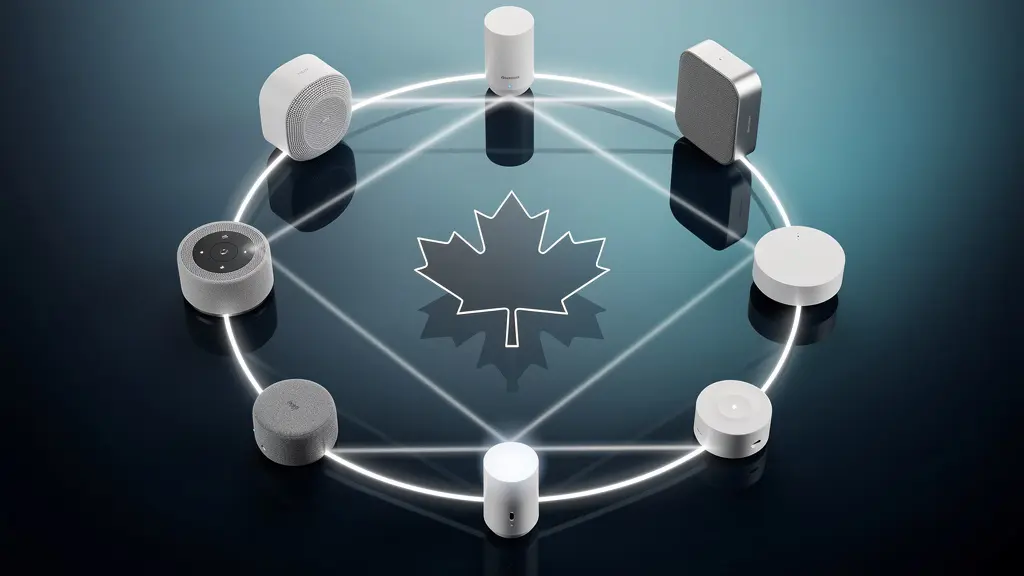
From a CIO’s perspective, the maturation of Matter is a critical development. As the standard evolves—the 2024 release of Matter 1.4 expanded support to include energy management devices and appliances—it de-risks the investment in smart office technology. By specifying Matter-compliant devices in your procurement policies, you ensure future flexibility and avoid being tethered to a single, proprietary ecosystem. While the standard is still developing, its backing by all major tech players signals a definitive shift away from fragmentation. Your long-term strategy should not be about choosing between Alexa and Google, but about building a flexible, interoperable smart office infrastructure built on the Matter foundation.
Voice Purchasing: How to prevent kids (or staff) from ordering supplies by accident?
Beyond data privacy, voice assistants introduce a direct financial risk: unauthorized procurement. The same feature that allows a user to conveniently re-order office supplies with a simple voice command can also be triggered accidentally or maliciously. While the scenario of a child ordering toys is common in a domestic context, the corporate equivalent—an unauthorized employee ordering unbudgeted equipment or an accidental command during a meeting leading to a large purchase—is a tangible threat that requires robust controls. In fact, adoption is already widespread, with a recent report indicating that 82% of companies are already utilizing voice technology in some capacity.
Disabling voice purchasing entirely is the most secure option, but it negates a key productivity feature. A more nuanced approach involves implementing a multi-layered defence through the device’s security settings. These controls must be a mandatory part of your device deployment checklist and enforced through your AUP. The primary goal is to introduce friction into the purchasing process to prevent accidental or fraudulent transactions while retaining the feature’s utility for authorized users.
The following table outlines the essential security features that must be configured to mitigate the risks associated with voice purchasing in a business environment. Each layer adds a level of verification and control that is critical for corporate governance.
| Security Feature | Implementation Method | Business Impact |
|---|---|---|
| Voice PIN Authentication | Multi-factor verification for purchases | Prevents unauthorized corporate spending |
| Purchase Limits | Configurable spending thresholds | Maintains budget control |
| User Profiles | Individual voice recognition | Tracks accountability |
| Hardware Mute | Physical microphone disconnect | Ensures confidential discussions |
By mandating the use of a voice PIN for all purchases and setting strict spending limits, you create a strong primary line of defence. Individual user profiles with voice recognition add a layer of accountability. These are not optional tweaks; they are fundamental security controls for managing financial risk in a voice-enabled environment.
Google Home vs. Amazon Alexa: Which ecosystem appeals most to Canadian homebuyers?
Understanding the Canadian consumer market is essential for predicting which technologies your employees will expect in the workplace. Employee preference is a powerful force that can render a corporate “ban” on a popular technology difficult to enforce. In Canada, the smart speaker market is not evenly split. Research clearly shows a dominant player, which has direct implications for your corporate strategy. If your workforce is overwhelmingly familiar with one ecosystem, deploying another could lead to a steeper learning curve and lower adoption.
Specifically, Canadian data shows a strong preference for Google’s ecosystem. According to Media Technology Monitor research, 55% of Canadian smart speaker owners use Google Home, compared to just 22% who use Amazon Alexa. This commanding lead is likely due to Google’s early and robust support for Canadian French and its deep integration with Android, the dominant mobile operating system. For a CIO, this statistic is not trivial. It suggests that a corporate deployment of Google Home devices will likely encounter less resistance and require less training than an Alexa-based one.
This does not mean Alexa should be dismissed. Amazon’s ecosystem has deep roots in e-commerce and a vast library of third-party “skills.” However, you must acknowledge the market reality: the average Canadian employee is more likely to be a Google Home user. This should inform your pilot program. You might choose to pilot both platforms to compare performance, or you might decide to align with the dominant market player to maximize user familiarity and accelerate adoption. Ignoring the established preferences of the Canadian consumer market is a strategic error.
Key Takeaways
- An outright ban on voice assistants is an untenable long-term strategy due to their normalization in consumer life.
- A formal Acceptable Use Policy (AUP) is the cornerstone of a secure deployment, defining rules for hardware mutes, voice purchasing, and data handling.
- Canadian-specific factors, such as bilingualism and Google’s market dominance, must guide your technology selection and pilot programs.
Smart Speakers: Why voice commands are a game-changer for seniors with arthritis?
To fully grasp the security threat surface, a CISO must analyze all features, even those not intended for a corporate environment. Features designed for accessibility, such as those that help seniors with mobility issues, often prioritize reducing friction above all else. While immensely valuable in their intended context, these same features can become significant security vulnerabilities when transposed to a corporate setting. The core design principle of making a device as easy to use as possible is often directly at odds with enterprise security principles, which rely on introducing friction (like passwords and multi-factor authentication) to verify identity and intent.
Consider features that allow a device to be controlled without a precise “wake word” or that have heightened sensitivity to pick up faint commands. These are game-changers for a person with a weak voice or physical impairment. However, in a bustling open-plan office or a collaborative boardroom, this heightened sensitivity dramatically increases the risk of accidental command execution. A snippet of a conversation could be misinterpreted as a command to delete a calendar, call a contact, or worse. The device’s attempt to be “helpful” becomes a vector for unintended actions.
The global proliferation of these devices, with market research indicating there could be 8.4 billion voice assistant devices in use globally by 2024, means that a vast array of features designed for diverse user groups will converge in your office. Your security framework cannot assume a single, standard user. It must account for these edge-case features and their potential for misuse. The lesson here is that any feature that lowers the barrier to interaction must be scrutinized for its potential to bypass necessary security checkpoints in a corporate context.
Why Smart Home Tech Increases Property Value for Canadian Developers by 15%?
The final factor in your strategic analysis is not technical, but cultural: the normalization of voice assistants in the daily lives of your employees. When real estate developers begin integrating smart home technology as a standard feature to increase property value, it signals a fundamental market shift. The technology is no longer a niche gadget for early adopters; it is becoming an expected utility, like plumbing or electricity. This trend has a direct and unavoidable impact on your corporate IT policy.
The adoption curve in Canada for these devices has been remarkably steep. Early Media Technology Monitor data shows that 8% of Canadians owned smart speakers in the first year of availability, an adoption rate that outpaced both tablets and Netflix in their respective first years. As employees become accustomed to the convenience of controlling their home environment with voice commands—from their lights and thermostat to their security system—they will naturally expect similar capabilities in their work environment. The office will feel antiquated if it lacks the voice-activated efficiencies they take for granted at home.
This creates immense cultural pressure on IT and security leadership. An outright ban on voice assistants will increasingly be seen as a draconian and out-of-touch policy, potentially impacting employee satisfaction and even recruitment. The argument that these devices are “consumer-grade” weakens when they are an integral part of modern home and building infrastructure. Therefore, the CISO’s role must evolve from that of a gatekeeper to a business enabler who manages the risk. The question is no longer whether to allow them, but how to create a secure framework that accommodates the inevitable.
The path forward is clear. Instead of resisting the tide of this transformative technology, your role is to channel it. The next logical and necessary action is to formalize your strategy by drafting a comprehensive Acceptable Use Policy and initiating a controlled pilot program to test these devices against the real-world conditions of your Canadian business operations.