
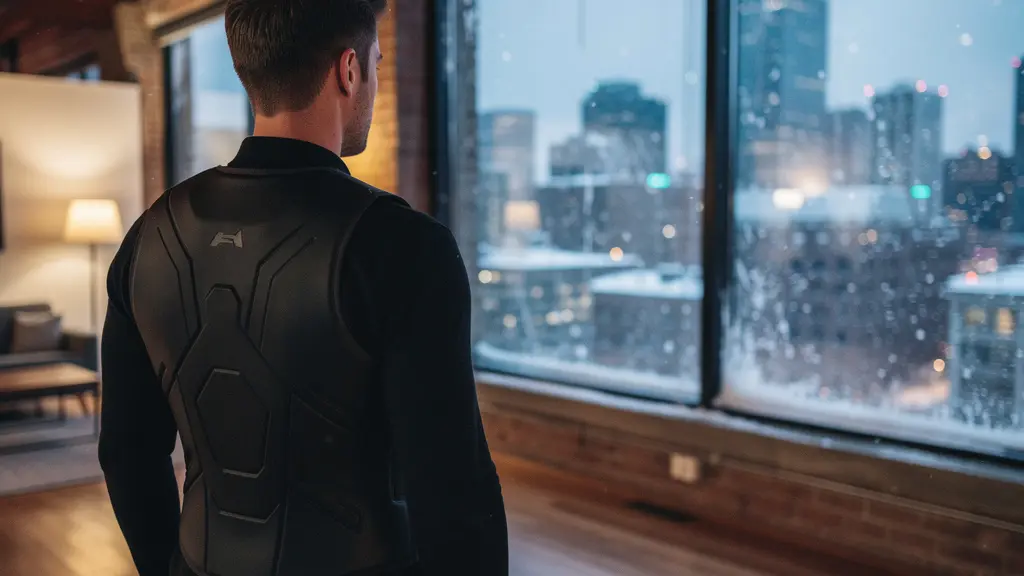
For the hardcore enthusiast, haptic suits have finally evolved from a novelty into a viable somatic bridge, provided you choose the right ecosystem.
- Modern actuators (LRA) offer precision far beyond the “rumble” of the past, creating distinct sensations for rain, impacts, and directional cues.
- Software support is the critical bottleneck; a vest is only as good as the native mod support it receives from developers.
Recommendation: If you primarily play supported VR shooters or sims, the investment delivers unmatched immersion. For casual flat-screen gaming, stick to high-end audio haptics.
You are standing in the middle of a digital warzone, your heart racing. But does your body actually feel the danger, or are you just staring at a high-resolution screen? For the Canadian gamer staring down a $500 (CAD) checkout cart for a haptic vest, this is the critical question. We aren’t talking about the simple vibration of a controller anymore. We are talking about wearable peripherals promising to translate digital data into physical sensation.
The skepticism is valid. For years, “immersion” has been a buzzword used to sell plastic accessories that end up gathering dust. The common advice suggests that better graphics or higher frame rates are the only upgrades that matter. However, as VR headsets reach visual parity with reality, the disconnect between what we see and what we feel—the “sensory gap”—has become the new frontier. It is not just about feeling a gunshot; it is about the weight of the atmosphere.
But here is the counter-intuitive reality: the future of immersion isn’t just about feeling good; it’s about physical consequence. True immersion requires a transaction of energy. If you want to feel the game, you have to be willing to wear the hardware, manage the cables, and endure the physical fatigue that comes with it. Is this the future of entertainment, or just an expensive way to sweat?
To help you decide if this technology belongs in your rig, we have broken down the ecosystem into its critical components.
Table of Contents : Haptic Suits Analysis
- Rumble vs. Haptics: How do actuators simulate the feeling of rain or a gunshot?
- Software Support: Which major game titles actually support haptic vests natively?
- Physical Exhaustion: How wearing haptic gear changes a gaming session into a workout?
- Subpac vs. Woojer: Which haptic audio device delivers the best bass response for music?
- Beyond Gaming: How haptic feedback is being used for remote rehabilitation therapy?
- The “VR Hangover”: How to implement training without making 20% of your staff nauseous?
- How does adaptive noise cancellation differ from passive isolation?
- PlayStation vs. Xbox Ecosystem: Which Offers Better Value for Canadian Gamers?
Rumble vs. Haptics: How do actuators simulate the feeling of rain or a gunshot?
The first misconception to dismantle is that a haptic suit is simply a giant game controller strapped to your chest. The technology powering high-end vests has moved significantly beyond the Eccentric Rotating Mass (ERM) motors found in your standard gamepad. While ERM motors are excellent for blunt force notification—telling you “something happened”—they lack the fidelity to tell you what happened. The current market is shifting toward Linear Resonant Actuators (LRA) and electro-muscle stimulation.
This shift is driven by a demand for nuance. In a high-fidelity simulation, you need to distinguish between the sharp crack of a sniper round, the rhythmic thud of a helicopter rotor, and the subtle patter of rainfall. This precision is what justifies the price point and drives the industry, according to a 2025 market research report on the VR haptic suit industry projecting massive growth. If the hardware cannot deliver this “texture” of sound and impact, it fails as an immersive device.
To understand what you are actually paying for, it is essential to look at the architectural differences between these technologies. The following breakdown illustrates why modern suits are more than just “rumble packs.”
As this comparison highlights, the move toward Piezoelectric and LRA allows for a “language” of touch. However, this hardware potential is useless without the software to drive it.
| Feature | ERM (Rumble Motors) | LRA (Linear Resonant Actuators) | Piezoelectric Actuators |
|---|---|---|---|
| Response Time | 50–100 ms | ~5–15 ms | <1 ms |
| Frequency Control | Limited (amplitude tied to frequency) | Narrow resonant band | Wide range, independently controlled |
| Power Consumption | Moderate | Lower than ERM | Higher voltage required |
| Cold Weather Sensitivity | High (lubricant thickening, friction increase) | Moderate (spring susceptible to temperature fluctuations) | Low (ceramic-based, less mechanical parts) |
| Cost | Low | Moderate | High |
| Best Use Case | Basic controller rumble | Smartphone haptics, game controllers | Precision haptic suits, medical devices |
Ultimately, the hardware is only a canvas; the game developers are the painters who must decide to use it.
Software Support: Which major game titles actually support haptic vests natively?
You can have the most advanced actuator array in the world, but without native code to tell it which motor to fire, it is effectively dead weight. This is the “paperweight anxiety” every early adopter faces. Native support means the game developer has written code specifically to map in-game events—like a bullet entering the left shoulder—to the corresponding motor on your vest. Without this, you are relying on audio-to-haptic conversion, which is akin to watching a movie with the subtitles out of sync.
The landscape is improving, but it remains fragmented. The market leaders are working hard to build ecosystems rather than just peripherals. For instance, there are now 250+ SteamVR and Oculus Quest titles with native support, ensuring that for the most popular VR shooters and rhythm games, the experience is plug-and-play. However, for niche titles or older backlogs, the community often has to step in where official support ends.
Case Study: TrueGear ME02 & The Community Model
The TrueGear ME02 haptic suit, released in late 2024, illustrates a shift in how support is generated. Shipping with 40 motors and electrical muscle stimulation (EMS), the hardware was capable, but the official game list was finite. During testing with flagship titles like Half-Life: Alyx, the EMS modules successfully replicated specific sensations like trigger pulls. However, recognizing they couldn’t patch every game themselves, the manufacturers implemented a community voting system to prioritize future support profiles. This democratized approach means the “utility” of the suit is directly tied to the activity of its user base.
For the Canadian gamer, this means your purchase decision should be based on your current library. If you main Pavlov or Beat Saber, the native support is there. If you are hoping for retro-active support for obscure titles, you will be relying on modders.
When the software and hardware align perfectly, the result is not just immersion, but physical exertion.
Physical Exhaustion: How wearing haptic gear changes a gaming session into a workout?
There is a hidden cost to haptic immersion that is rarely listed on the spec sheet: metabolic cost. Wearing a vest that weighs several kilograms while actively dodging in VR transforms a sedentary hobby into an athletic event. This is particularly relevant during Canadian winters, where indoor activity is crucial, but it also changes the nature of “play.” You don’t just play a round of a shooter; you endure it.
The industry is aware of this friction point. Newer generations of hardware are aggressively cutting weight to keep users in the headset longer. In fact, new haptic suit models have reduced weight by nearly 20% based on extensive user comfort studies. Yet, even with lighter gear, the somatic feedback loop—where your brain reacts to a hit by tensing your muscles—creates cumulative fatigue.
Case Study: The GingasVR Endurance Test
VR streamer GingasVR pushed this concept to its absolute limit by constructing a rig worth over $15,000 that layered two haptic suits simultaneously. One layer provided vibration feedback for texture, while a second layer delivered actual electric shocks to simulate health damage in Skyrim VR. Coupled with temperature control, this setup demonstrated that extended sessions produce significant physical strain. The streamer experienced muscle contractions and genuine exhaustion comparable to a gym session. While extreme, this proves that haptics can bridge the gap between digital action and physical consequence.
This “digital fatigue” is a feature, not a bug, for the simulation enthusiast. It adds stakes to the gameplay. However, it also means that a haptic vest might not be the right choice for a relaxing Friday night after a long week of work.
If your goal is musical immersion rather than tactical feedback, the hardware requirements shift dramatically toward frequency response.
Subpac vs. Woojer: Which haptic audio device delivers the best bass response for music?
Not all haptics are designed for bullets and rain. A significant segment of the market is dedicated to “somatic audio”—feeling the bass frequencies of music or cinema directly in your torso. This is where the distinction between “impact” and “resonance” becomes vital. Devices like the Woojer use localized motors similar to gaming vests, whereas the SubPac utilizes tactile transducers to replicate sub-bass frequencies.
For the Canadian audiophile, this distinction is crucial. Shipping duties and availability vary, but more importantly, the use case defines the value. If you want to “feel” your music while commuting or working, a strap-based system is superior. If you are a producer mixing tracks or a home theater enthusiast wanting to feel the engine rumble in a movie without shaking the floorboards for the neighbors downstairs, a transducer backpack or seatback is the correct tool.
The following table breaks down the trade-offs between these two dominant form factors.
Understanding these differences prevents buyer’s remorse. A gamer buying a SubPac for FPS gaming will be disappointed by the lack of directional cues, just as a music lover will find a gaming vest muddy and imprecise for bass monitoring.
| Criteria | Vibrotactile Wearable Devices (e.g., Woojer-type) | Transducer-Based Backpacks (e.g., SubPac-type) |
|---|---|---|
| Primary Technology | Miniaturized vibrotactile motors distributed on strap | Large-area tactile transducer mounted on back panel |
| Bass Frequency Range | ~20–200 Hz (focused on mid-bass) | ~1–200 Hz (extended sub-bass) |
| Form Factor | Compact strap or vest, highly portable | Backpack or seat-mounted unit, less portable |
| Use Case Fit | Gaming, personal music, commuting | Studio mixing, live performance, immersive cinema |
| Corporate Gift Suitability (Canada) | Higher — lighter, more versatile, easier to ship | Niche — best for music/film industry professionals |
| Approximate Price Range (CAD) | $150–$300 | $400–$600 |
The precision required for high-fidelity audio is now being repurposed to help patients relearn how to interact with the physical world.
Beyond Gaming: How haptic feedback is being used for remote rehabilitation therapy?
The most exciting application of haptic technology might not be in the living room, but in the clinic. As Canada faces an aging population and vast distances between rural patients and specialized care, tele-rehabilitation is becoming a priority. Haptic gloves and vests are being adapted to provide tactile cues that guide patients through physical therapy exercises remotely, ensuring they are performing movements correctly without a therapist physically guiding their hands.
This “phantom guidance” relies on the neuroplasticity of the brain—its ability to rewire itself. By stimulating the nerves in the hand or arm synchronously with visual cues in VR, patients recovering from strokes can rebuild the neural pathways lost to injury. It transforms therapy from a repetitive chore into an engaging, gamified process with immediate sensory rewards.
As noted by experts in the field:
The addition of a haptic glove to VR therapy may significantly enhance outcomes such as grip strength and lateral pinch, suggesting that tactile feedback could play a vital role in rehabilitation effectiveness.
– Researchers, Springer Nature
This visual below illustrates the delicate intersection of technology and human recovery, where a simple glove becomes a lifeline to independence.
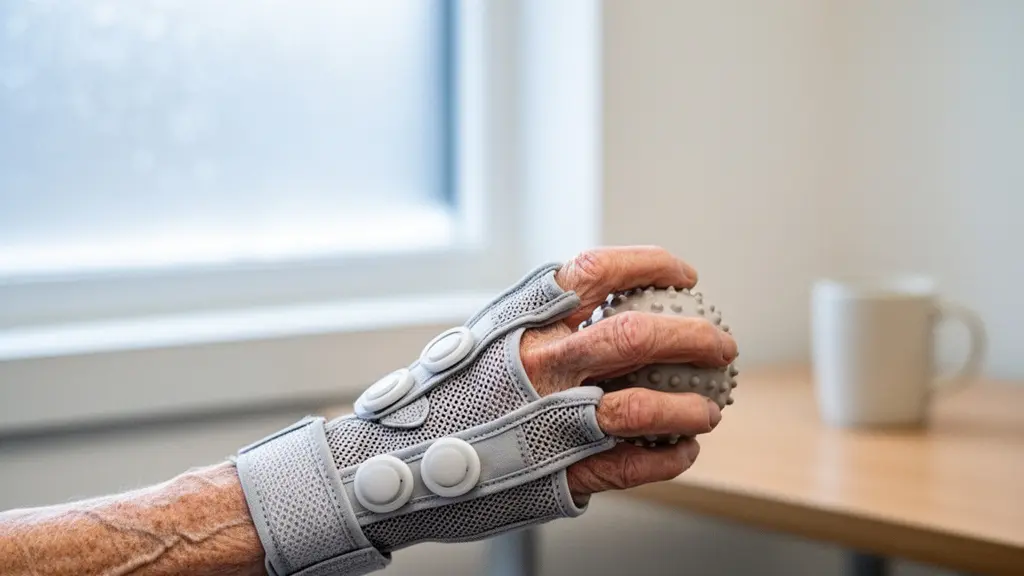
The warmth and simplicity of this setup belie the complex data exchange happening between the patient’s nerves and the digital system.
While therapy aims to heal, improper implementation of VR and haptics can induce nausea, a critical hurdle for enterprise adoption.
The “VR Hangover”: How to implement training without making 20% of your staff nauseous?
For businesses looking to deploy VR training with haptics, the “vomit factor” is a serious ROI killer. Vestibular dissonance occurs when your eyes see movement (like flying a drone or walking a construction site) but your inner ear registers stillness. This sensory conflict causes nausea, often called the “VR Hangover.” Haptic suits can actually help solve this by providing a “somatic anchor”—physical feedback that confirms movement to the body, aligning the senses.
However, this is not a magic fix. A systematic review on Virtual reality for stroke rehabilitation suggests that while adverse events are manageable, they depend heavily on the hardware and the task duration. Implementing this tech requires a protocol, not just a purchase order. You cannot simply strap a vest on an employee and expect them to train for an hour.
Plan d’action : 5 Steps to Mitigate VR Sickness
- Select lightweight, stable HMDs: Heavy headsets increase physiological tiredness and visual fatigue, accelerating nausea.
- Limit initial sessions: Cap VR exposure to 15–20 minutes to allow the user’s vestibular system to adapt gradually.
- Offer non-immersive alternatives: Mandatory 2D accommodations must be available for employees with vestibular disorders or pregnancy.
- Integrate haptic feedback: Use tactile cues from vests to anchor the user’s proprioception and reduce the visual-vestibular mismatch.
- Monitor adverse events: Use a Simulator Sickness Questionnaire (SSQ) after sessions to document issues and adjust safety protocols.
Managing sensory input includes controlling what you hear, which brings us to the battle between Active Noise Cancellation and passive blocking.
How does adaptive noise cancellation differ from passive isolation?
When we talk about immersion in Canada, we often ignore the environment outside the headset. Whether it is the roar of an HVAC system or the silence of a snowy night, controlling ambient noise is key. Adaptive Noise Cancellation (ANC) uses microphones to listen to the world and generate “anti-noise” to cancel it out. Passive isolation, conversely, relies on physical seals—silicone tips, heavy foam—to block sound waves from entering the ear canal.
For the Canadian consumer, the distinction matters because of our climate. Electronics struggle in extreme cold; batteries drain faster and LCDs lag. Passive isolation is immune to temperature. Furthermore, regarding market trends, North America dominated the global haptic devices market, driven by a demand for premium integrated experiences where high-end audio and haptics converge.
Questions fréquentes sur Haptics and Audio
How does adaptive noise cancellation (ANC) work compared to passive isolation in cold Canadian environments?
ANC uses microphones and processors to generate anti-phase sound waves that cancel incoming noise, while passive isolation relies on physical barriers (foam, silicone ear tips, over-ear padding) to block sound. In extreme cold (-40°C), ANC electronics can experience battery drain and algorithmic delays, whereas passive isolation materials maintain consistent performance regardless of temperature.
Can ANC headphones qualify as safety equipment for Canadian corporate tax deductions?
Under CRA guidelines, ANC headphones may qualify as deductible safety equipment if they are mandated by occupational health and safety regulations in specific work environments (e.g., aviation, industrial sites). However, when gifted as consumer electronics for general use, they are typically classified as taxable employee benefits.
Why might passive isolation outperform ANC for Canadian-specific noise profiles?
ANC algorithms are typically trained on common urban noise profiles (traffic, HVAC hum). Canadian-specific sounds — extreme wind chill gusts, snowmobile engines, and ice crackling — feature irregular, broadband frequency patterns that ANC systems struggle to cancel in real time. Passive isolation physically blocks these unpredictable noise types more consistently.
For the majority of gamers, the choice isn’t between vest brands, but between the two dominant console platforms.
PlayStation vs. Xbox Ecosystem: Which Offers Better Value for Canadian Gamers?
At the end of the day, advanced haptics are an ecosystem play. Sony has doubled down on haptics with the DualSense controller and PSVR2, integrating localized feedback directly into the standard experience. Xbox has historically lagged here, focusing on “impulse triggers” but lacking the HD rumble fidelity of its competitor. However, Xbox’s value proposition in Canada lies in Game Pass, offering a library that makes the hardware cost more palatable.
The market reflects this split. While North America holds the largest share of the haptic gaming suit market, Canada is witnessing steady growth due to a tech-savvy population willing to invest in peripherals that work across platforms (PC/VR). Yet, for plug-and-play console haptics, Sony currently holds the technological crown.
The image below captures the stark, clean aesthetic of these competing inputs, waiting for the player to make a choice.
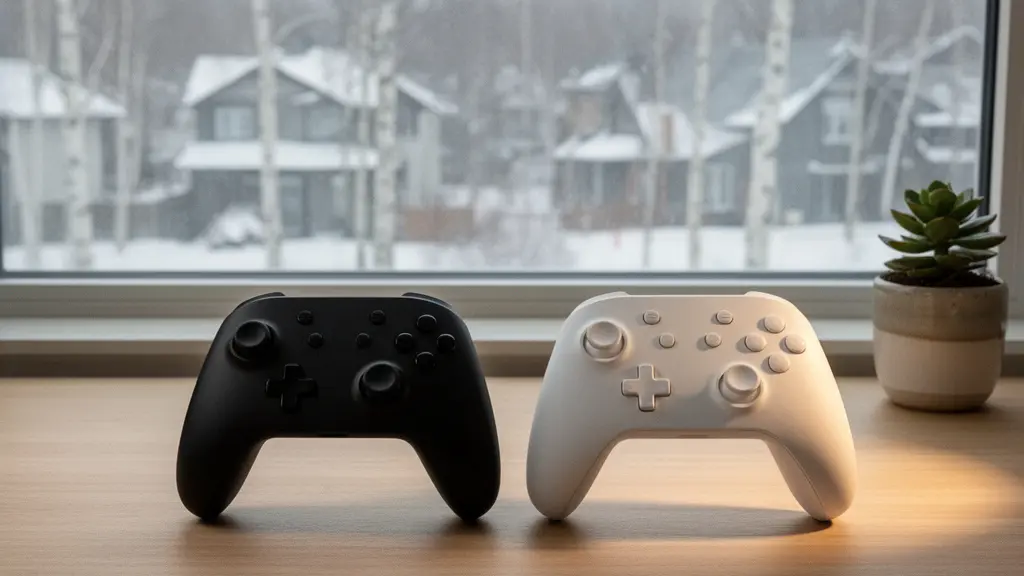
Choosing a controller is no longer just about button layout; it is about choosing how much of the game you want to feel.
Key Takeaways
- Native software support is the single most important factor when buying haptic gear.
- Expect physical fatigue; these devices turn gaming into an active experience.
- For music, choose transducers (SubPac); for gaming impacts, choose vibrotactile motors (bHaptics/Woojer).
We have traversed the landscape from the technical specifications of actuators to the metabolic reality of a “VR hangover.” The verdict is clear: haptic suits are no longer a gimmick, but they are a commitment. They demand physical energy, financial investment, and technical patience.
Evaluate your current gaming library today—if more than 30% of your top-played games have native support, it is time to invest in the hardware.